Sep 18 — Nov 07, 2026
Opening reception: Friday, September 18, 6-8PM
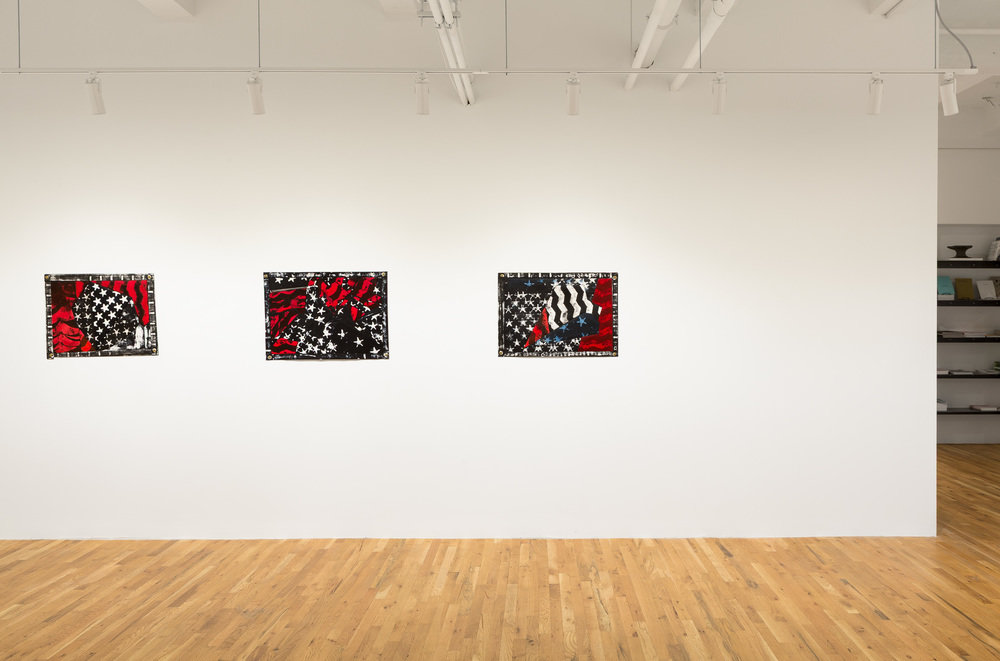
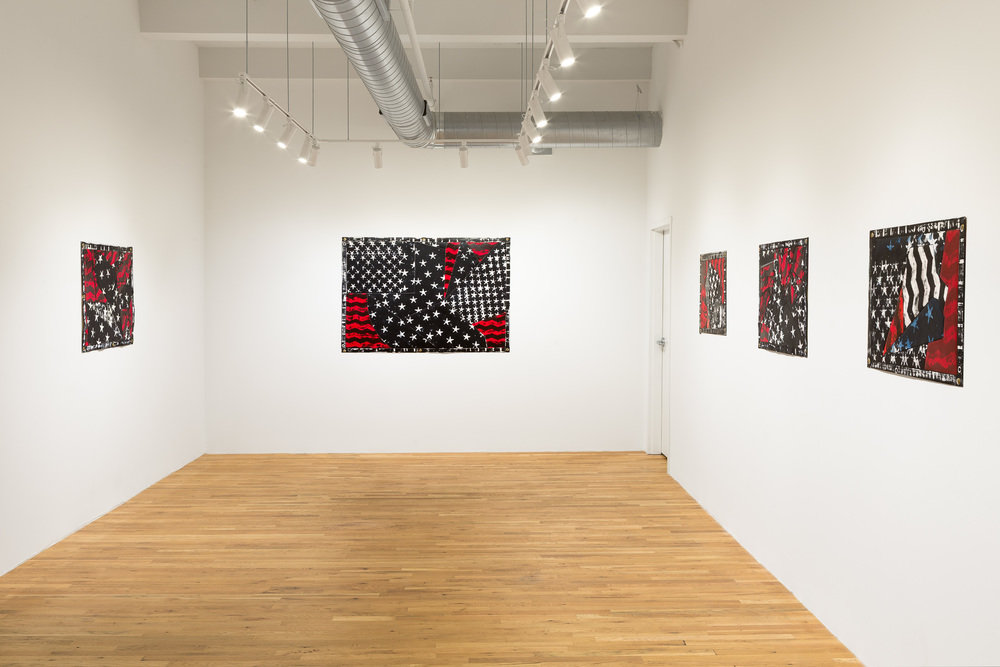
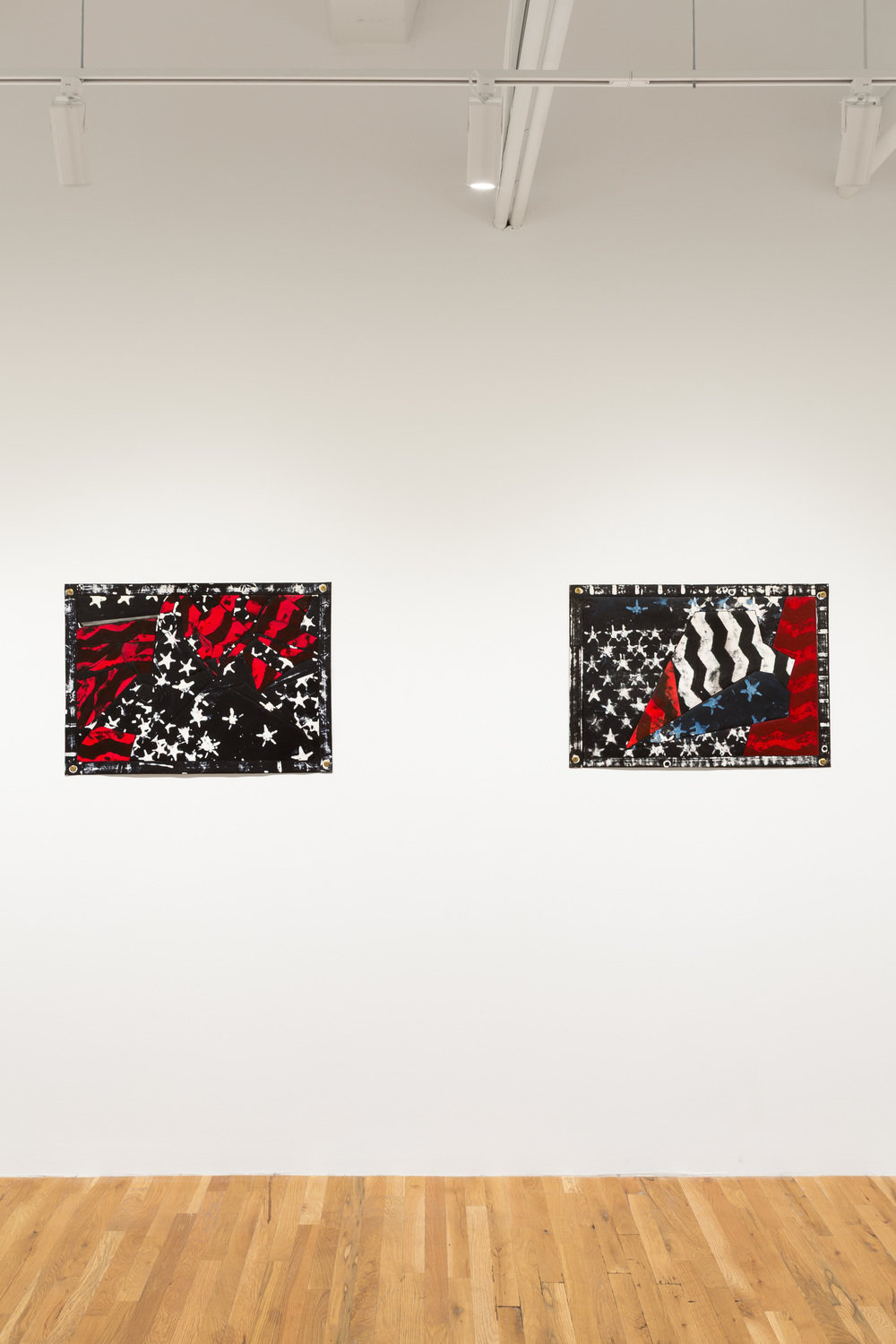
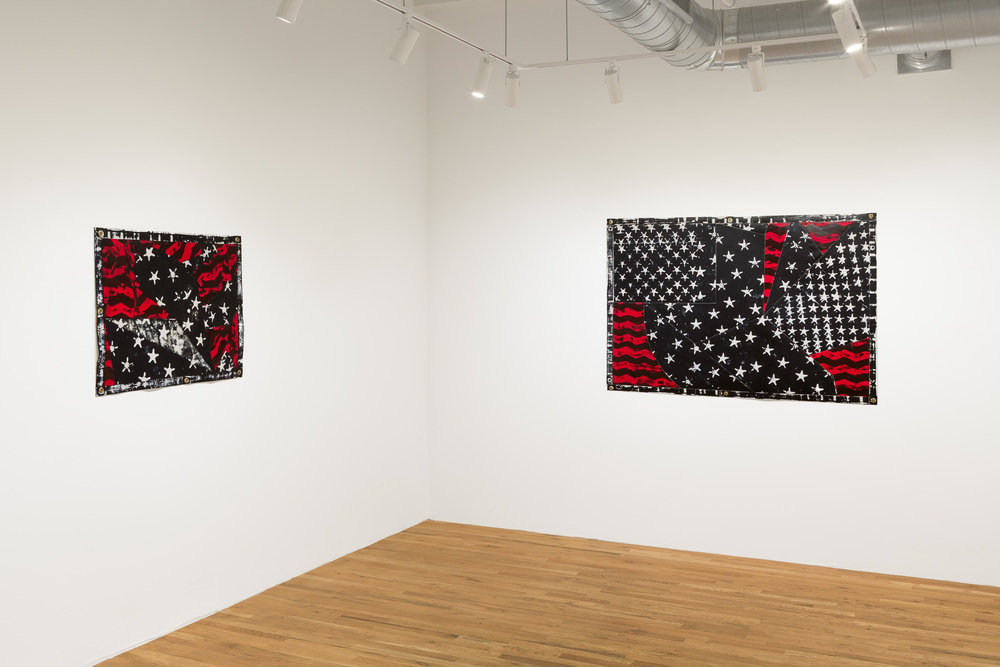
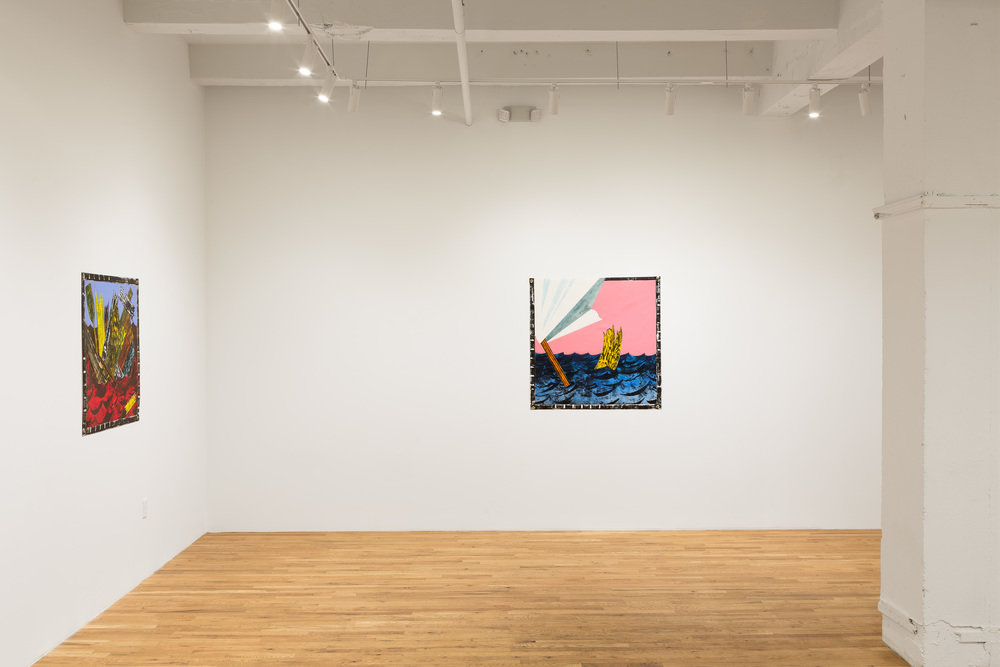
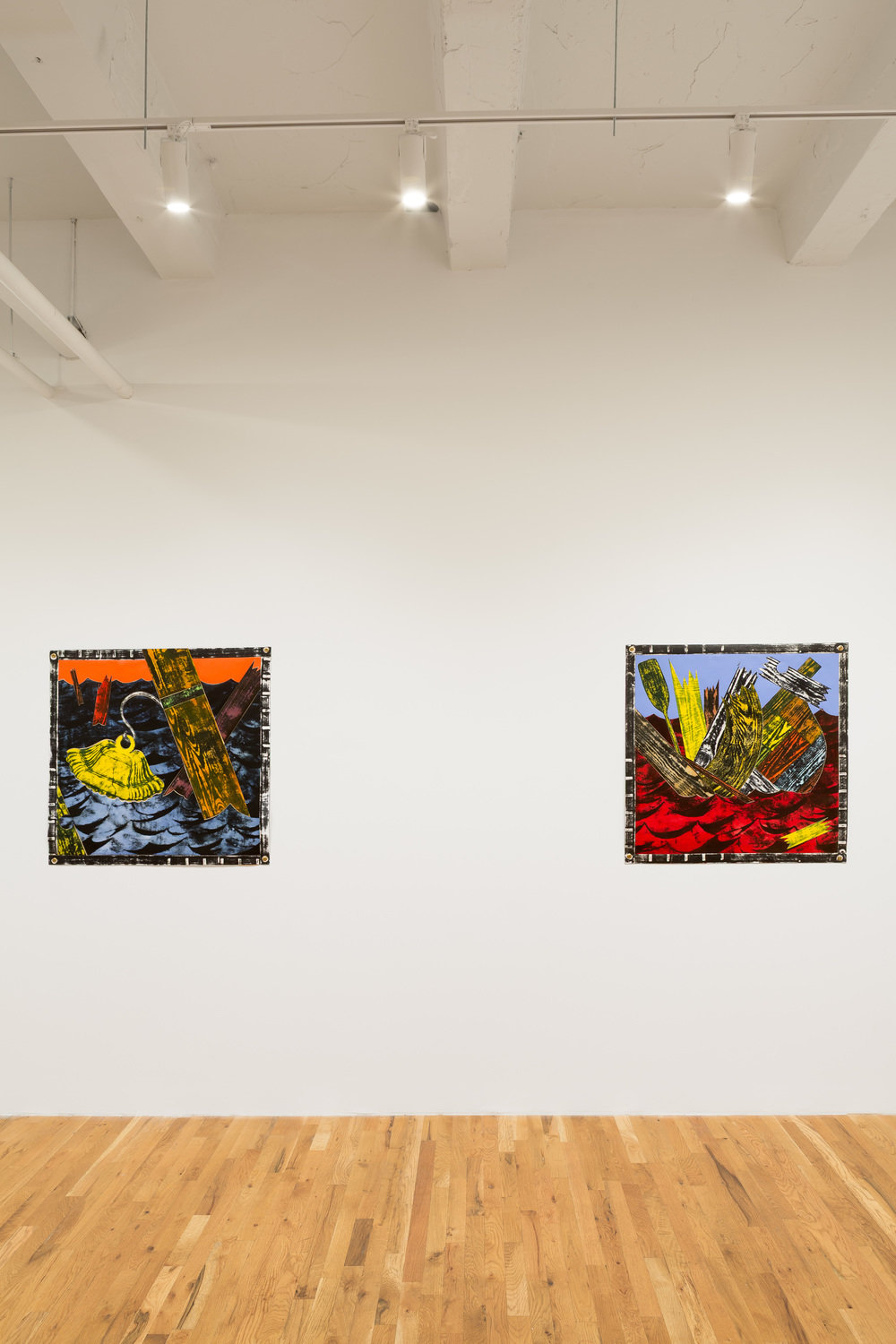
Fleisher/Ollman is pleased to present Reconstruction, an exhibition of new paintings by Mark Thomas Gibson (b. 1980, Miami, FL; lives and works in Philadelphia).
Gibson explores American culture through an interlocking set of perspectives: the artist, the professor, and the devoted student of American history. He examines the relationship between the individual and state power through painting, drawing, sculpture, printmaking and publishing, revealing a vision of America in which every viewer is implicated as a potential character within the story. These perspectives define a practice rooted in historical inquiry and imagemaking.
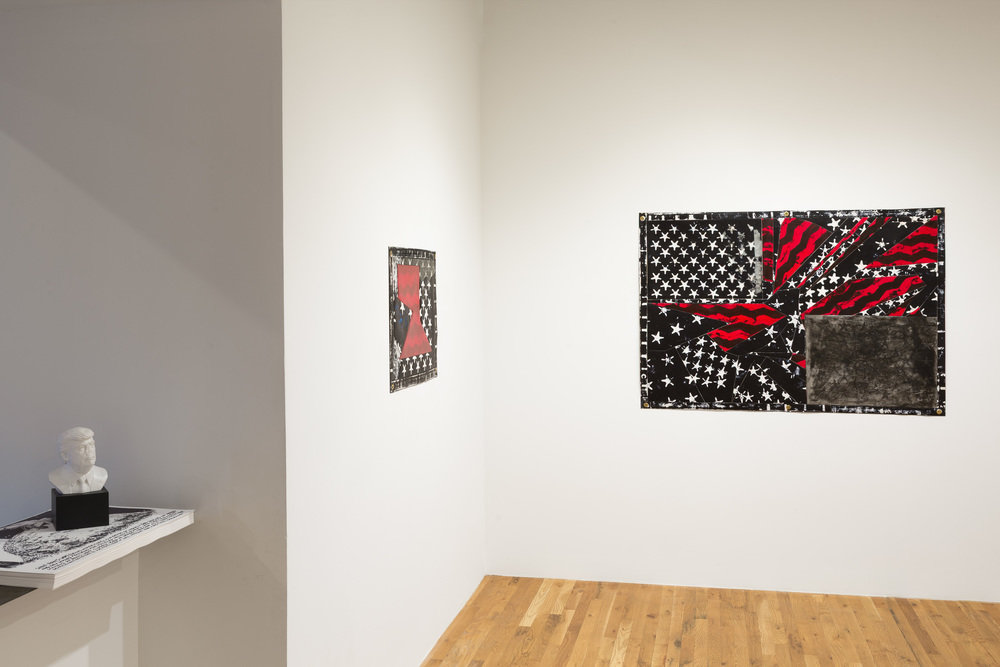
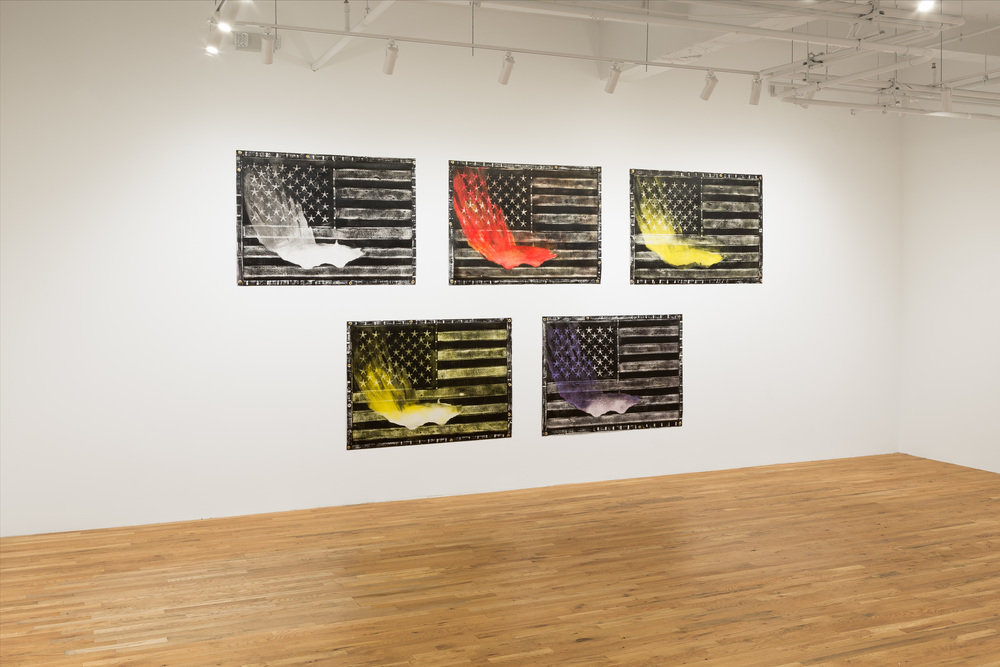
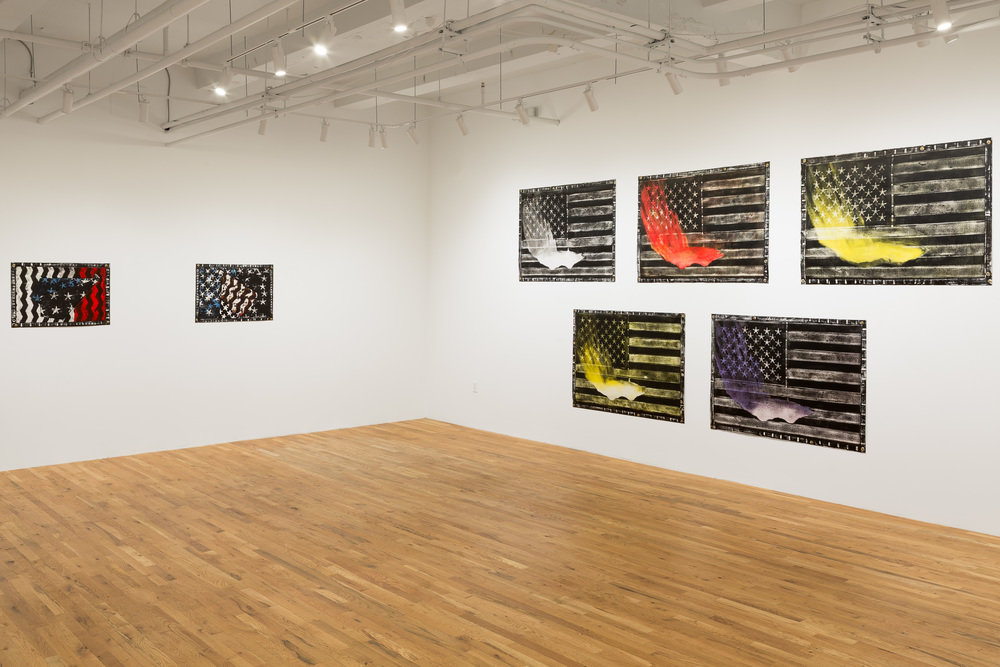
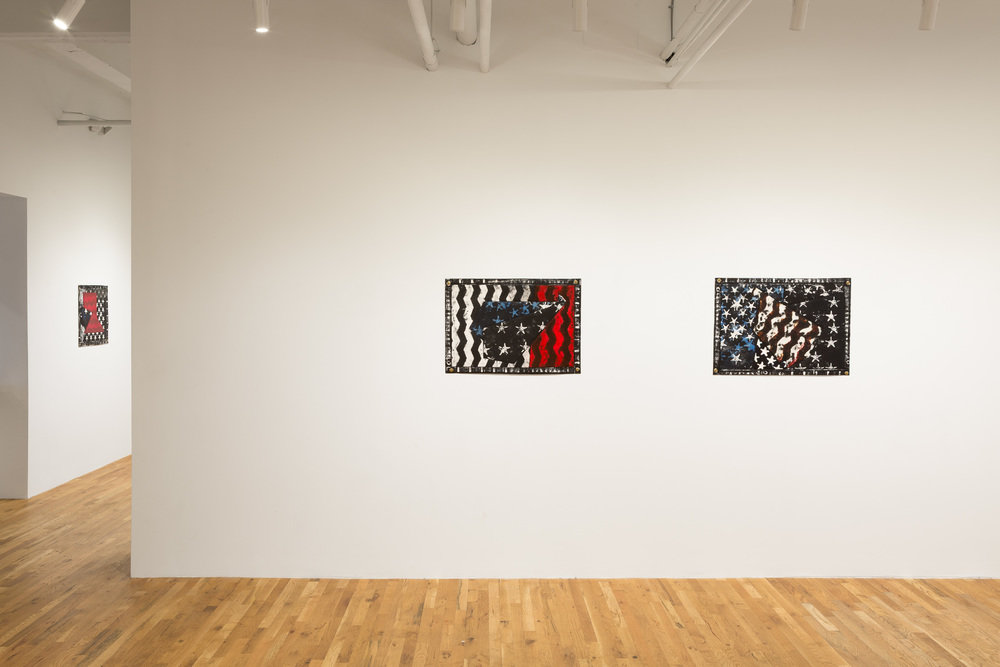
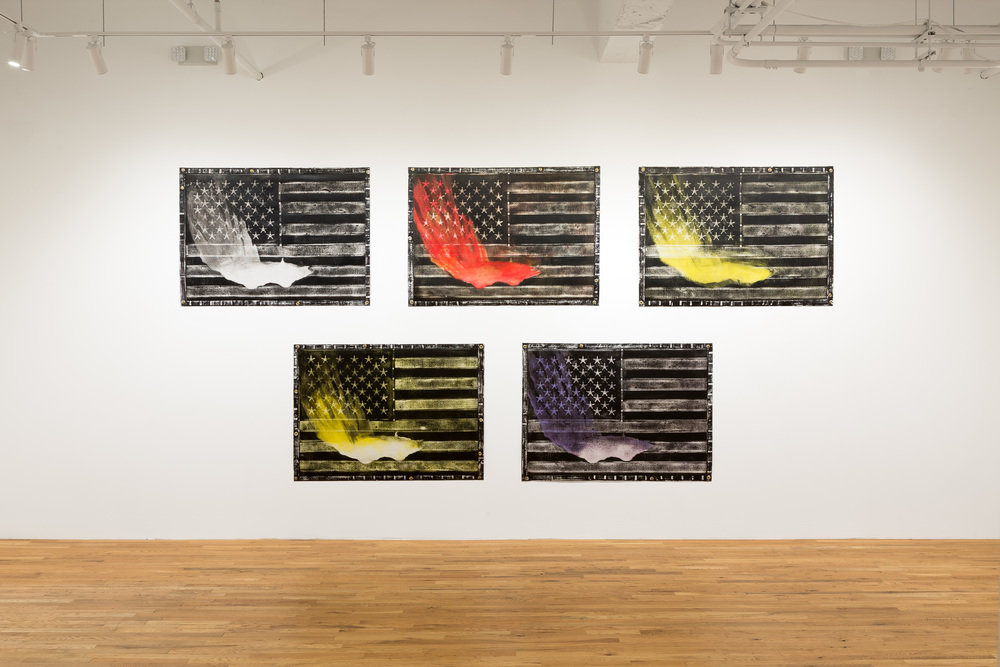
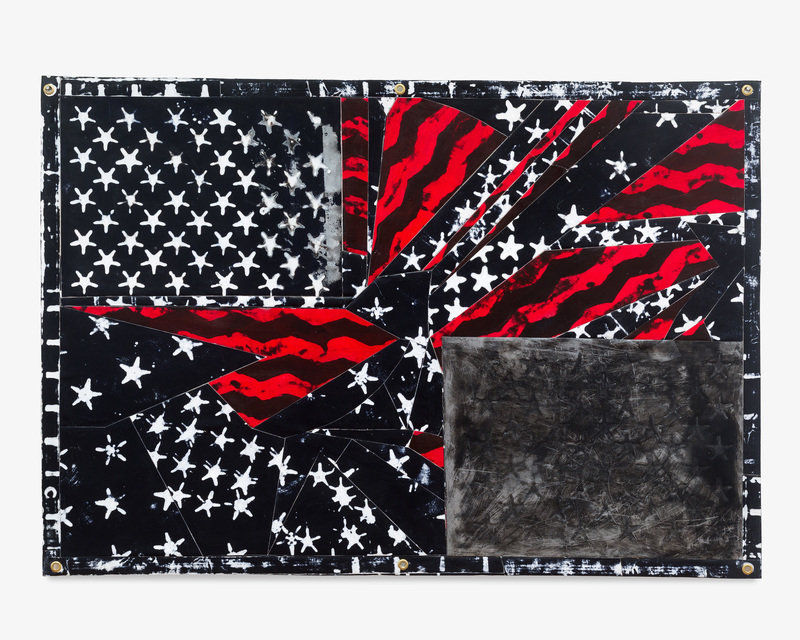
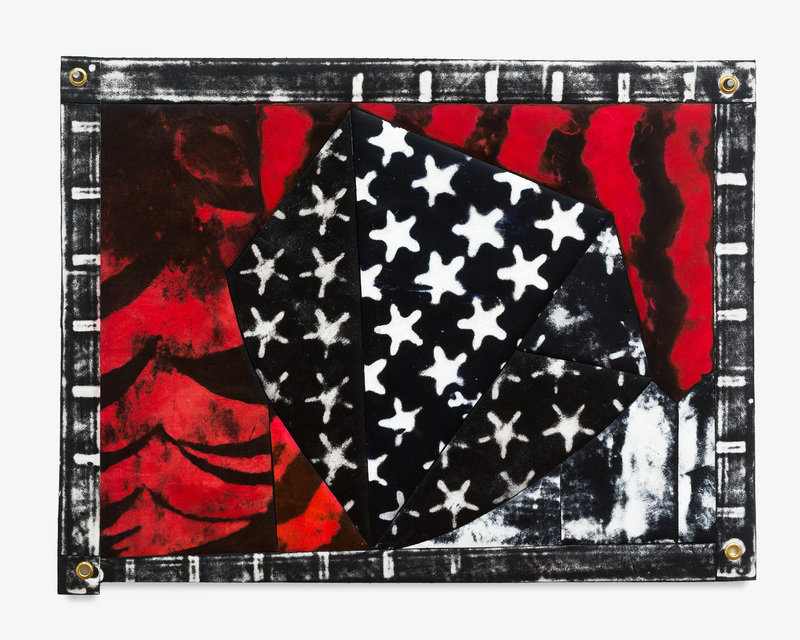
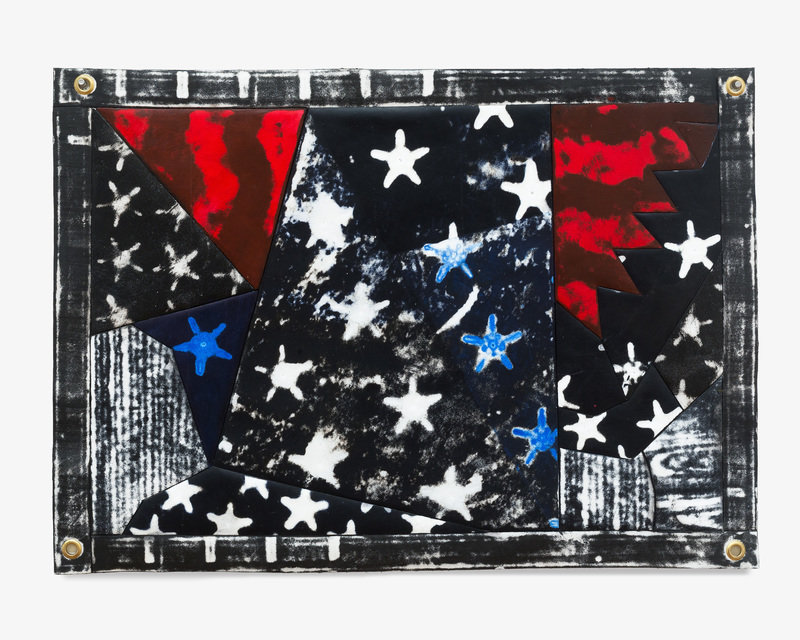
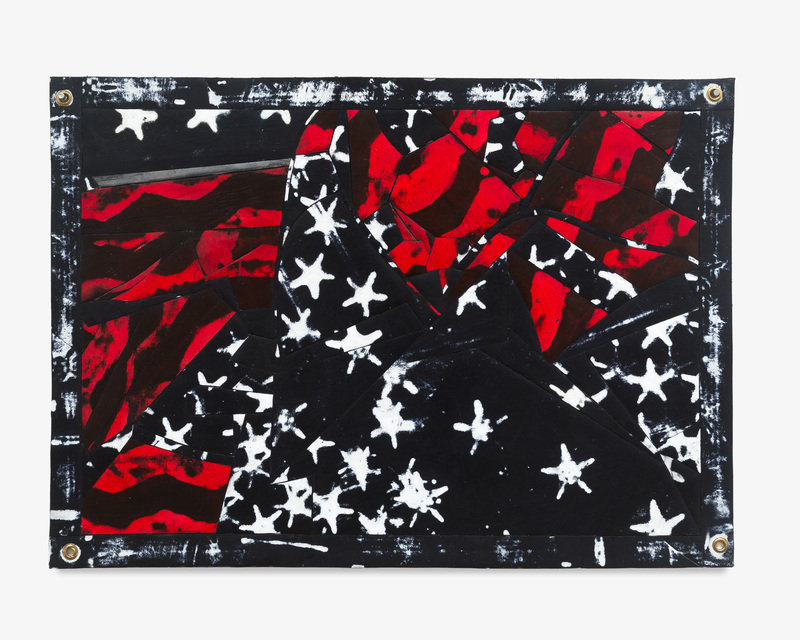
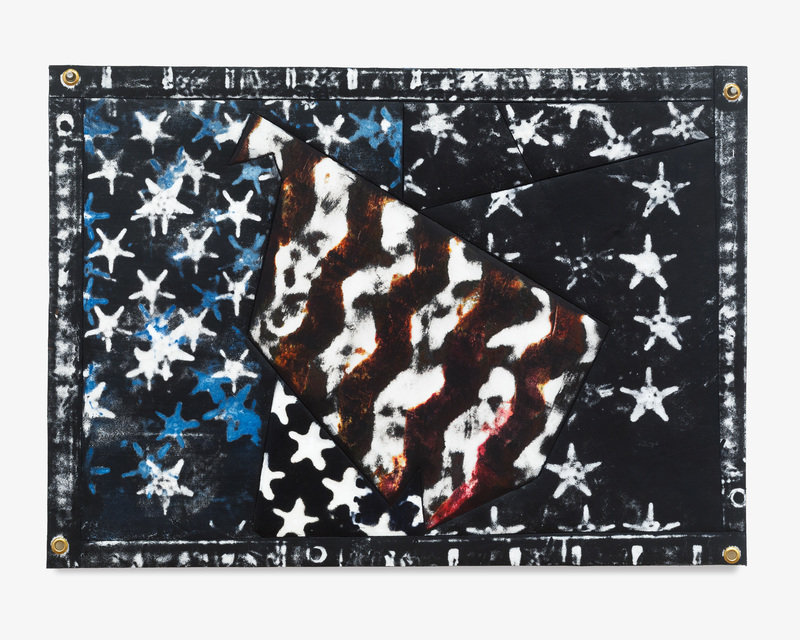
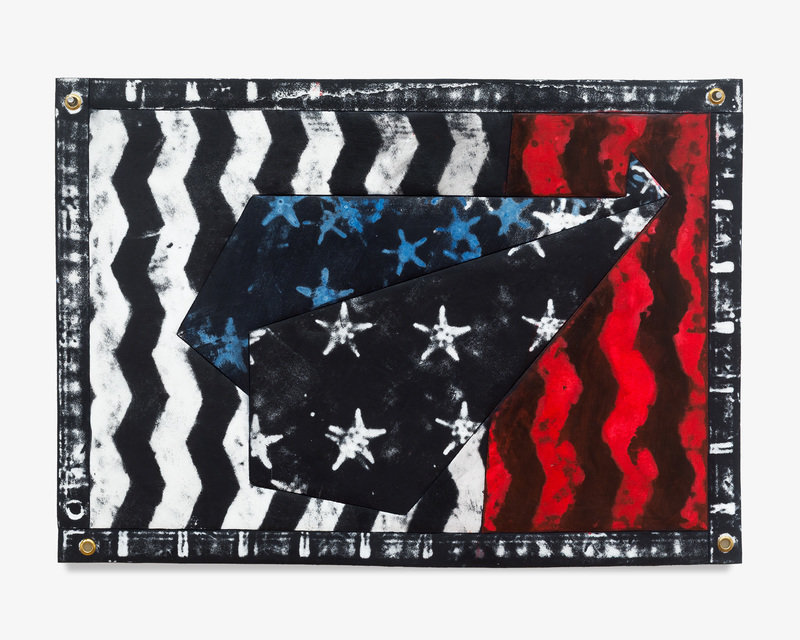
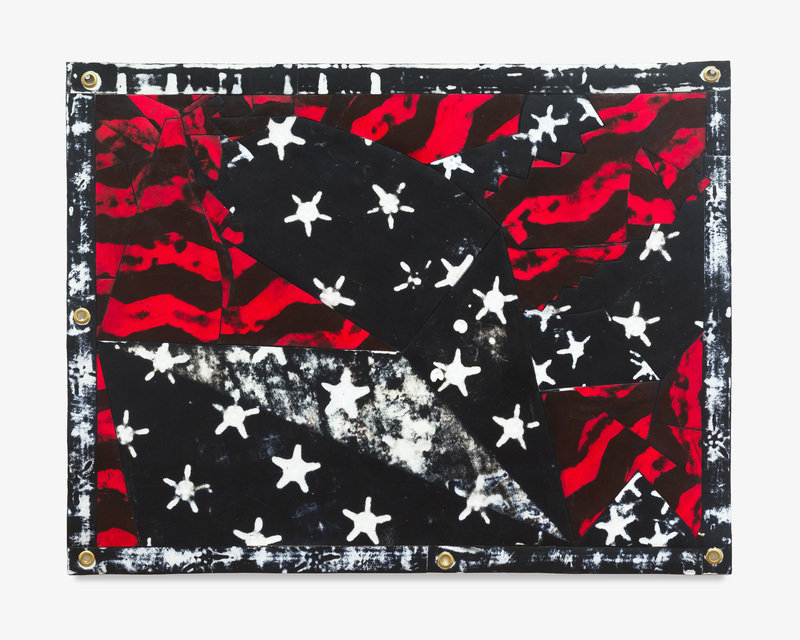
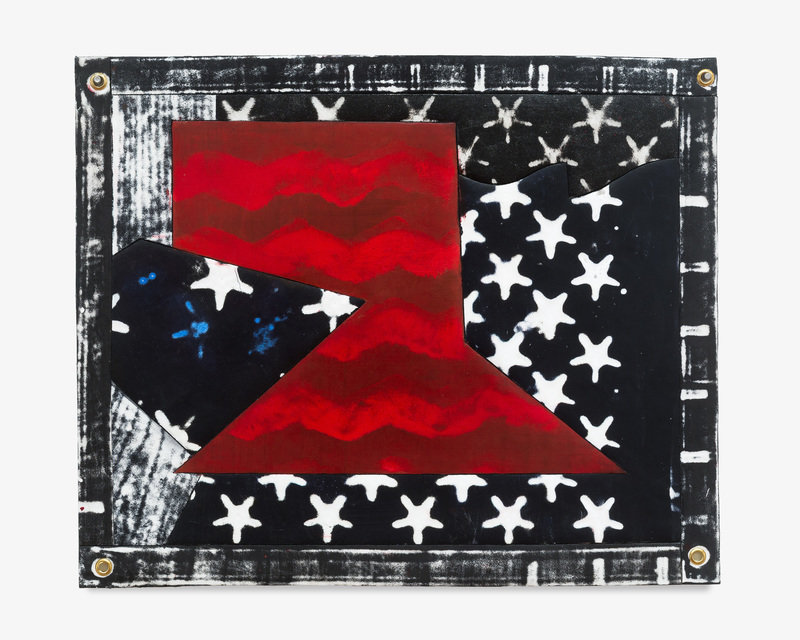
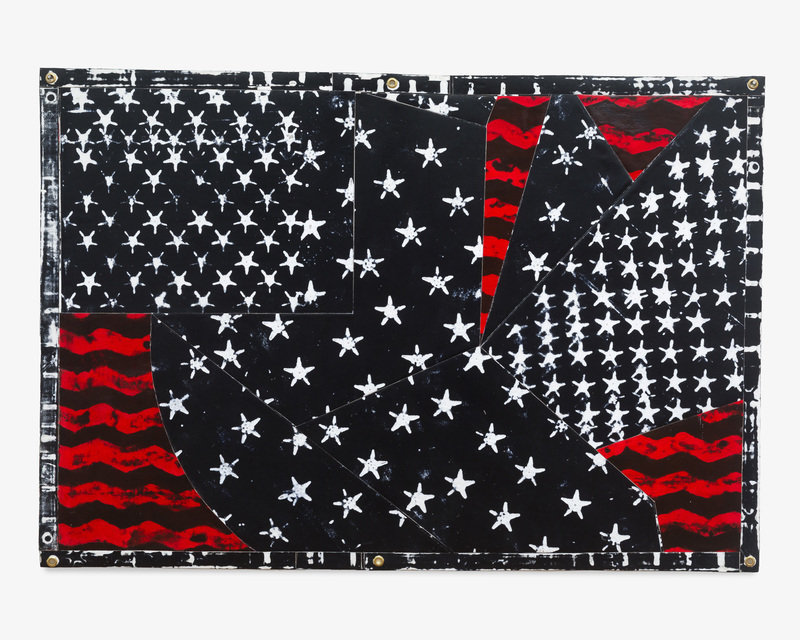
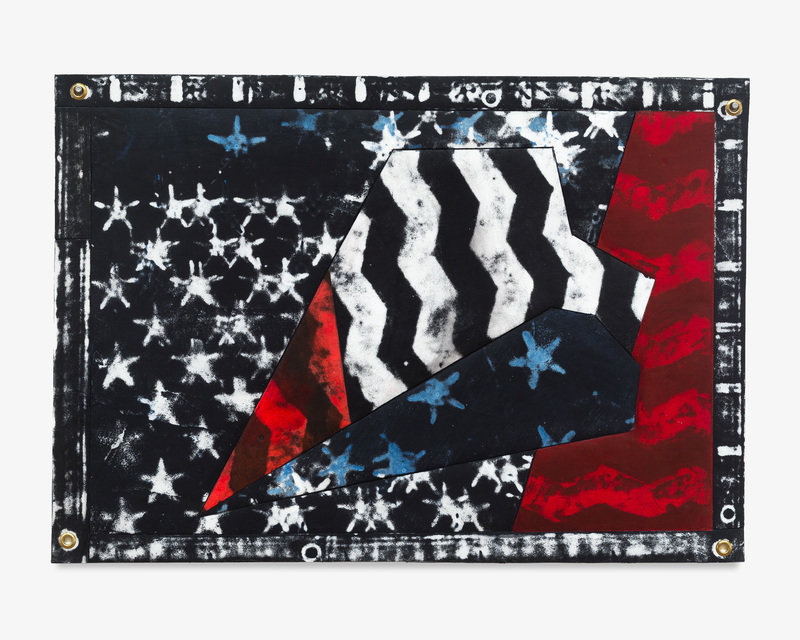
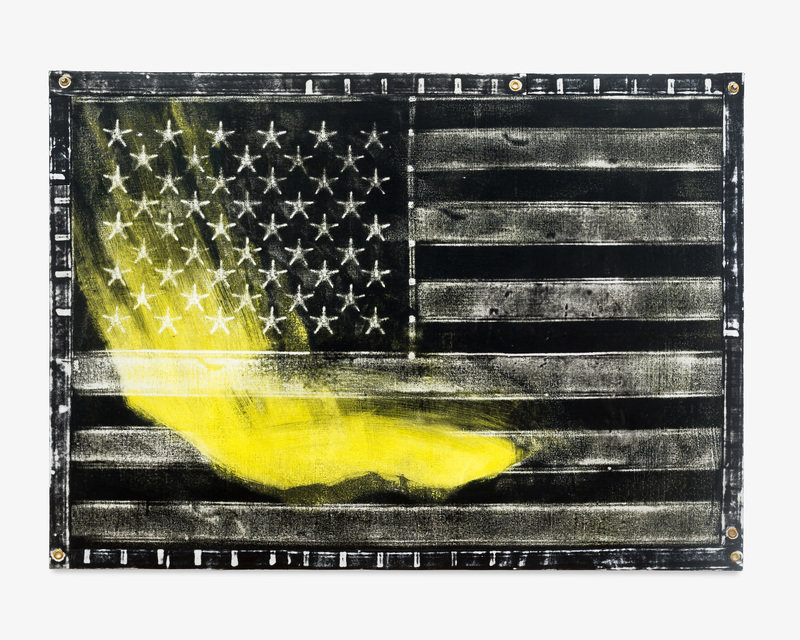
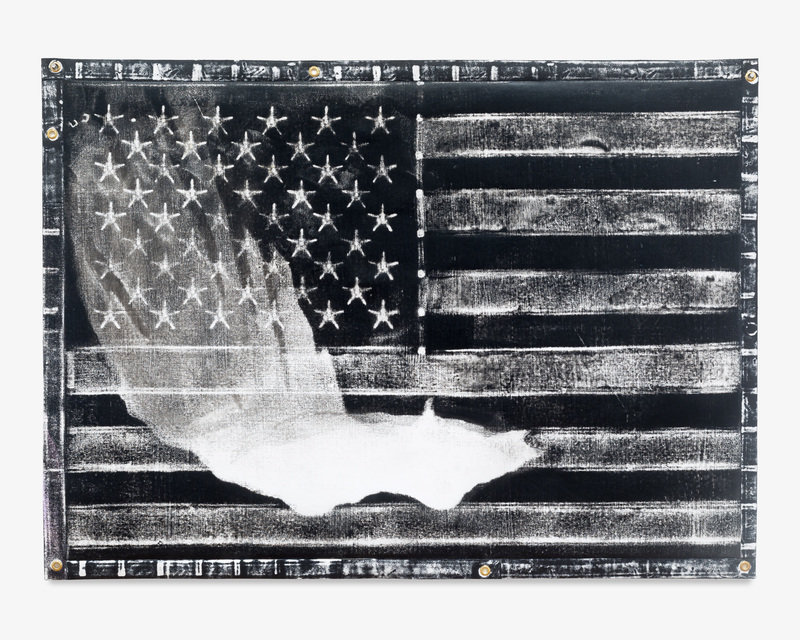
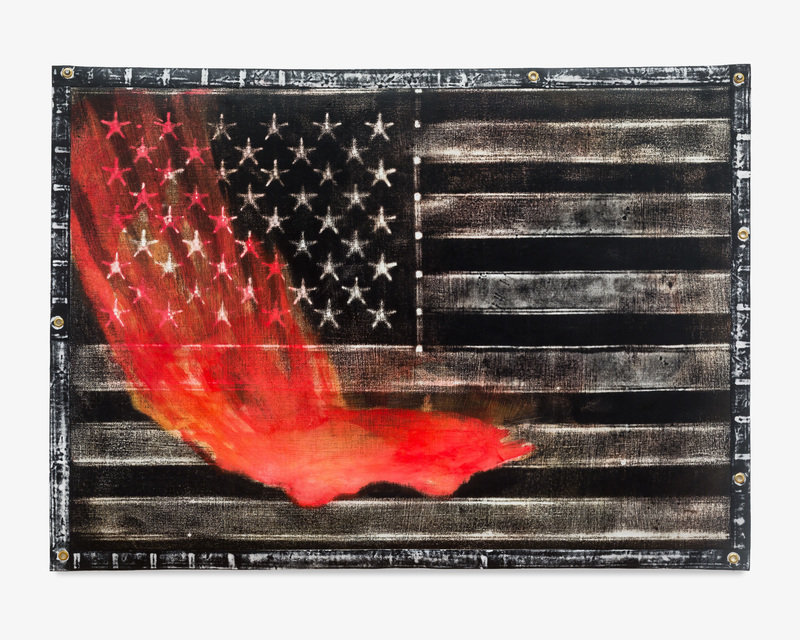
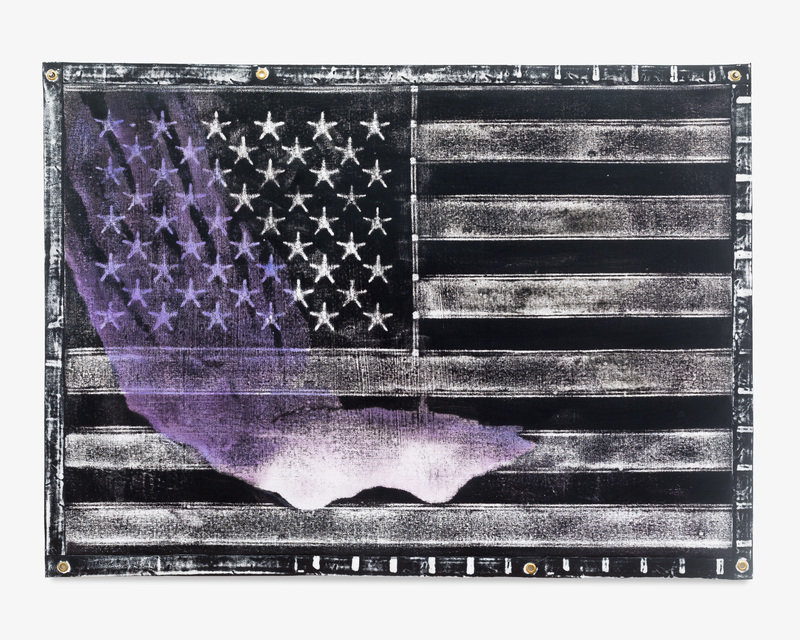
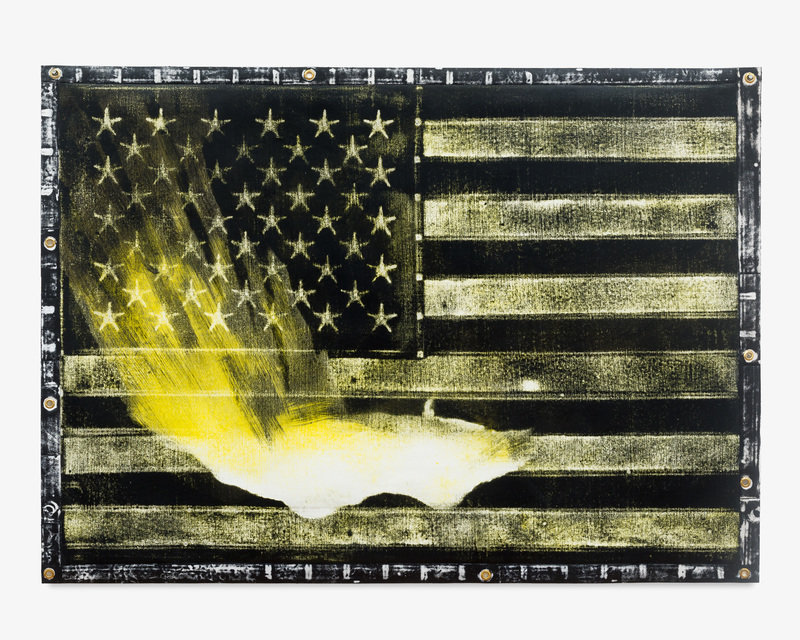
The works in Reconstruction are built from the remains of an earlier body of work. In 2020 and 2021, Gibson produced a series of paintings using the motif of the United States flag, stark, direct images that borrowed the repetition and distortion of Andy Warhol's Shadows and the serial dread of his Electric Chair paintings. Gibson’s flag paintings, made during the pandemic and the closing months of the first Trump administration, depended on the atmosphere of their moment. Removed from it, the artist suspected, the images would go quiet.
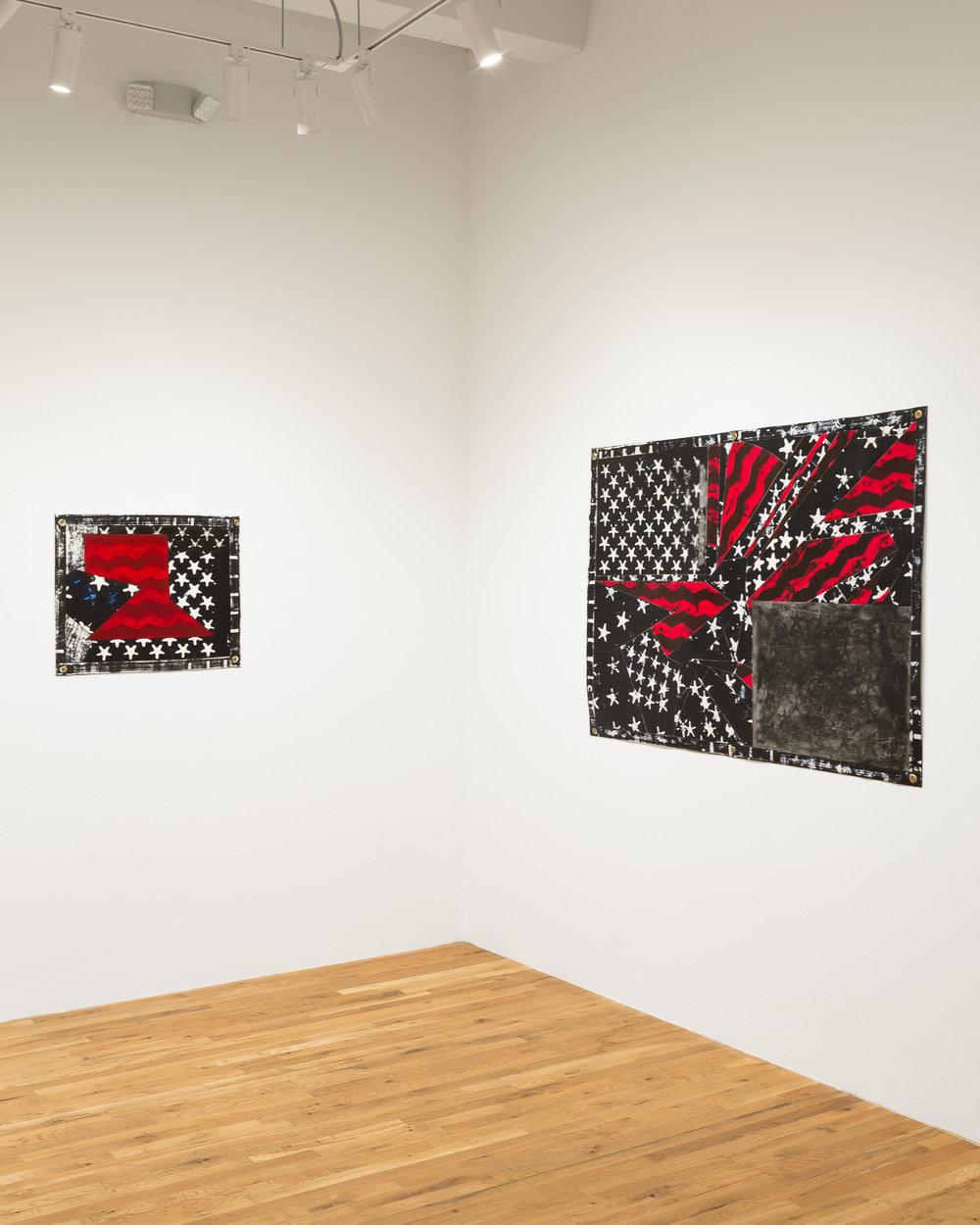
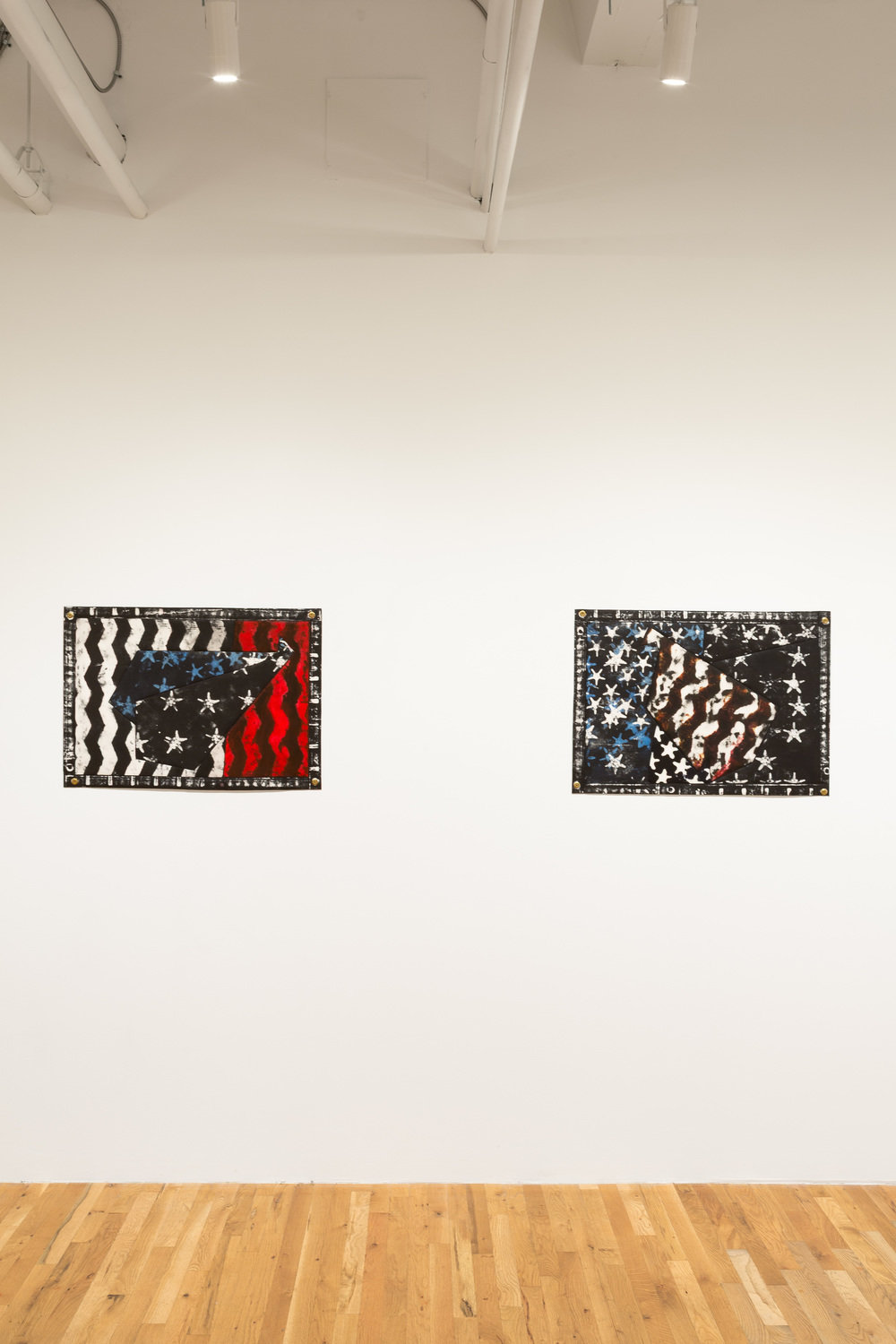
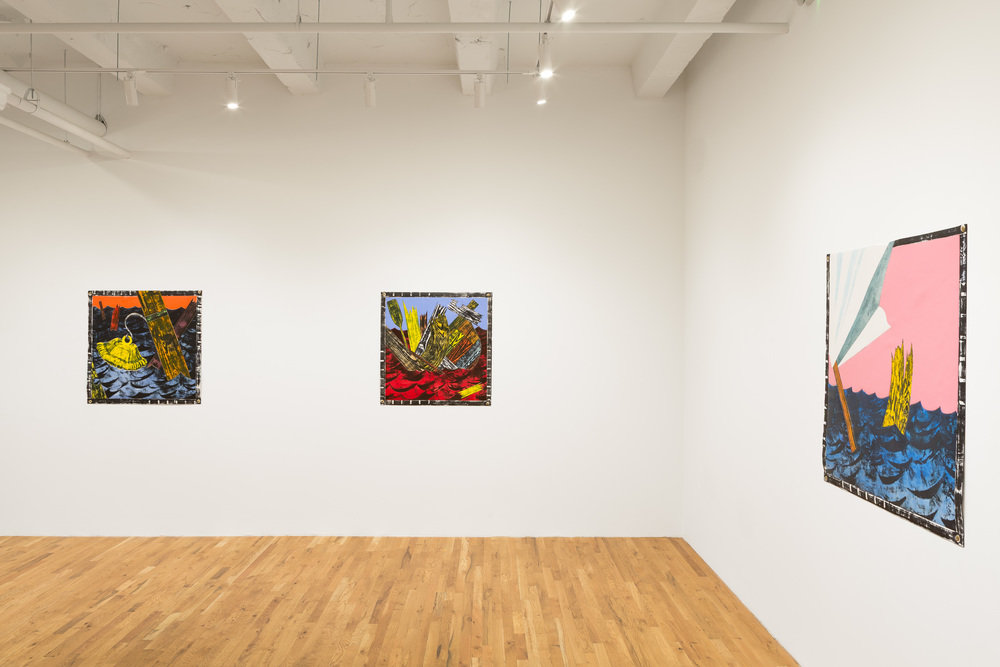
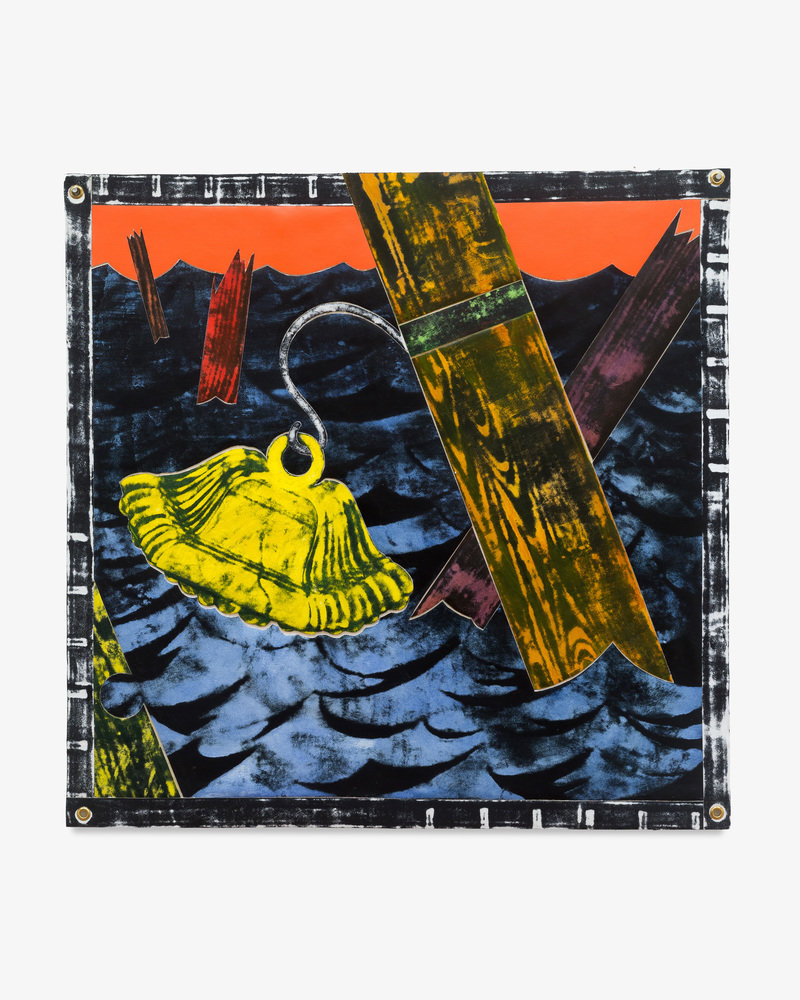
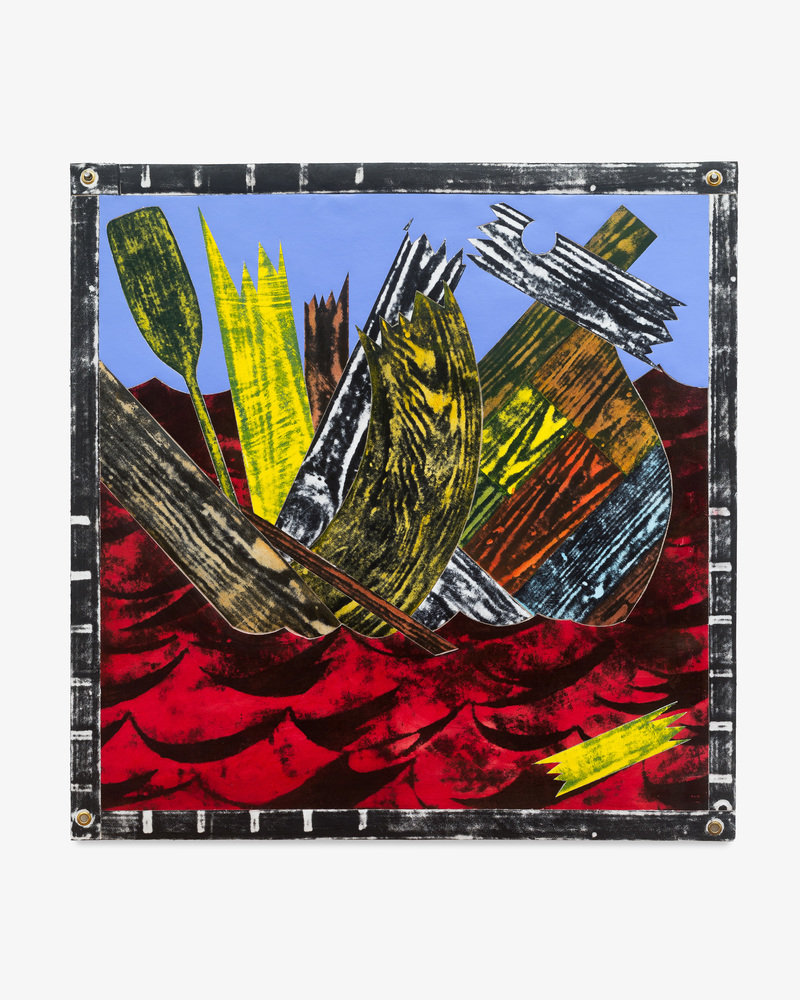
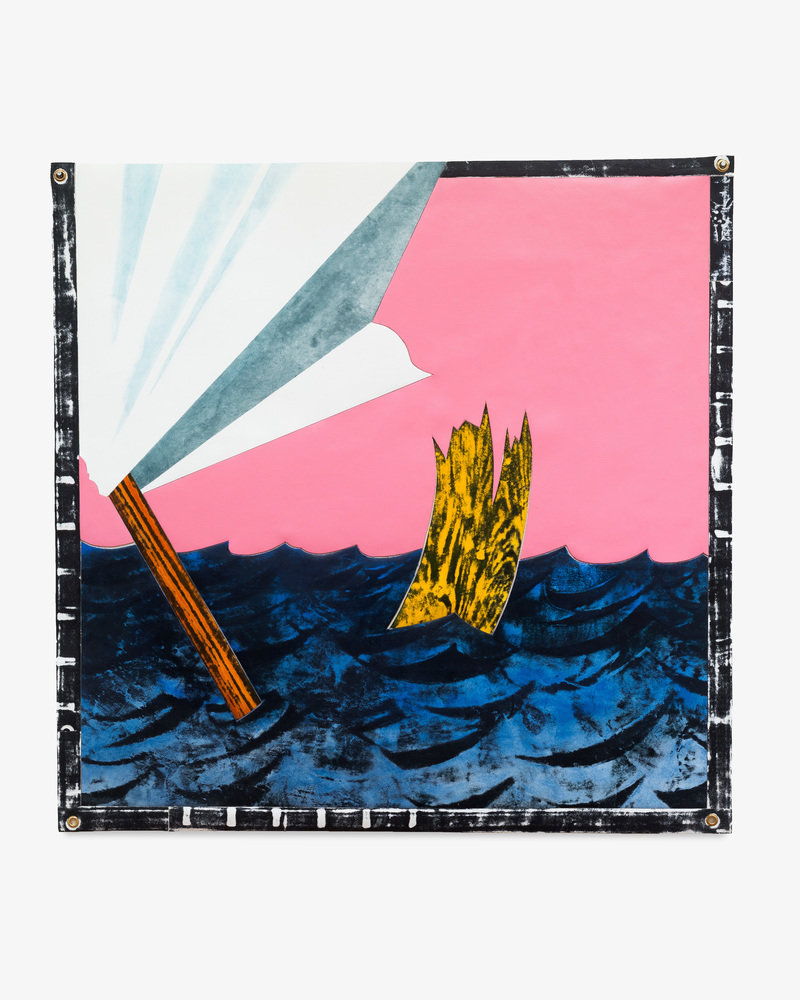
Rather than let them recede fully, Gibson has taken the earlier paintings apart and rebuilt them. New material is sourced to complete the unfinished work; the scraps left behind catalyze the next move. The resulting paintings are pieced and quilted, hung so that they drape slightly, turning a flat image into an object with physical weight. Apart from the symbols carried over from the flag, the only consistent organizing principle at play is the rectangle.
Reconstruction proceeds from a premise about repair: that to repair is not necessarily to reconstitute what existed before. Ideally, in the act of repair we remove what is necessary in order to create a better, healthier, and more robust whole. However, the outcome is more often language that legitimizes the attempt at repair while leaving fissures of discord and doubt instead of actual mends.
That premise takes on particular weight in a year marked by both the second Trump administration and the 250th anniversary of the United States. The exhibition continues Gibson's ongoing argument for semi-consistent, agreed-upon visual forms of representation capable of uniting a people and the conviction that this can be accomplished without degrading or erasing cultural differences. Many of the paintings here operate as ambiguous keys, cut to open several doors at once, holding room for interpretation so that unity might be debated civilly rather than assumed as given sinking ourselves into further polarization.
The fractured flag abstractions featured in Reconstruction remain deliberately loose and open, actively renegotiating their own visual hierarchy. They quote a complicated past from inside an uncertain future, and they insist on looking at it head-on. For Gibson, his reconstructed flags are symbols of generative resistance, banners for a new way of envisioning country and community. His ambition for the work is that it makes a reorientation possible: toward one another, and toward a future worth wanting.
Mark Thomas Gibson has had solo exhibitions at venues including the Tang Teaching Museum, Skidmore College (Saratoga Springs, NY); the Museum of Fine Arts (Boston); Berman Museum (Collegeville, PA); The Library Company of Philadelphia; Museum of Contemporary Art Detroit; Sikkema Jenkins & Co. (New York); KDR (Miami); Loyal (Stockholm); and M+B (Los Angeles), among others. He has been featured in group exhibitions at Luhring Augustine, Pace Gallery, and Barbara Gladstone Gallery (all in New York); Perrotin (Tokyo); the Fairfield University Art Museum (Fairfield, CT); the Driskell Center at the University of Maryland (College Park); SCAD Museum of Art (Savannah, GA); the African American Museum of Philadelphia; and the Virginia Museum of Contemporary Art (Richmond), among others. Gibson's work is held in the public collections of the Metropolitan Museum of Art, the Baltimore Museum of Art, the Library of Congress, and the Nelson-Atkins Museum of Art (Kansas City, MO). Gibson has been awarded a Guggenheim Fellowship, a Pew Fellowship, a Hodder Fellowship from Princeton University, and a Louis Comfort Tiffany Biennial Grant. He has been a MacDowell Fellow twice and has had residencies at Yaddo, the Elizabeth Murray Artist Residency, the Fountain Head, the Headlands Center for the Arts, Ox-Bow School of Art, and Pilchuck Glass School. Gibson received his BFA from The Cooper Union in 2002 and his MFA in Painting/Printmaking from Yale School of Art in 2013.